Contractor Onboarding: 5 Steps to Onboard Contractors
Contractor onboarding is the process of preparing contractors to work safely and effectively within an organisation or on a specific site. It helps organisations collect key information, complete checks and provide contractors with the information they need before work begins.
A clear process can also make contractor records easier to manage. It helps teams see what has been completed and what is still outstanding.
What is contractor onboarding?
Contractor onboarding is a structured process used to prepare external contractors before they start work. It can include document checks, inductions, training and site information.
The exact process will depend on the organisation, site and type of work.
Contractor onboarding may include:
- contact and company details
- qualifications and certifications
- insurance documents
- health and safety information
- site rules and procedures
- contractor inductions
- role-specific training
- emergency procedures.
This gives organisations a consistent way to prepare contractors and keep important information in one place.
Why is contractor onboarding important?
Contractors may work across different sites, projects and environments. Each workplace can have its own risks, rules and training requirements.
A clear onboarding process helps organisations communicate this information before work starts.
It can also help teams identify missing documents, expired certifications or outstanding training.
For contractors, good onboarding provides clear information about the site, their role and what is expected of them.
Key Stats:
20% increase in productivity and 30% reduction in time-to-value for companies with a strong contractor onboarding process (Source: Vendor Management International)
Contractors with a positive onboarding experience are 69% more likely to stay for future projects (Source: MBO Partners).
5 steps for effective contractor onboarding
The exact process will vary depending on the organisation and type of work, but these five steps provide a useful starting point.
#1 Collect contractor documents and information
Start by collecting the information and documents required from each contractor.
This may include:
- contact details
- company information
- qualifications
- certifications
- insurance documents
- licences or permits.
Check that required documents are current. Missing or expired information can then be identified before work begins.
Keeping contractor information together also makes records easier to review and update.
#2 Explain roles, responsibilities and site requirement
Contractors should know what is expected of them before they start work.
Provide clear information about their role and responsibilities. Include any requirements that apply to the workplace or site.
This could cover site access, working hours, reporting procedures and site rules.
Contractors should also know who to contact if they have a question or need to report a problem.
#3 Complete contractor induction and training
Contractors may need to complete an induction or other training before they begin work.
Induction content can include:
- health and safety information
- site rules
- emergency procedures
- hazards relevant to the site
- required policies and procedures
- task-specific information or training.
Where appropriate, some induction content can be completed online before the contractor arrives on site.
Organisations should also keep a record of completed training and identify when refresher training may be required.
#4 Check requirements before work begins
Before a contractor starts work, check that the requirements relevant to their role have been completed.
For example, check that:
- required documents have been provided
- inductions have been completed
- relevant certifications are current
- required training has been completed
- important site information has been provided.
This makes outstanding requirements easier to identify before the contractor starts work.
#5 Monitor contractors and keep records up to date
Contractor onboarding does not necessarily end when work begins.
Documents can expire, site requirements can change and contractors may need updated information or refresher training.
Keeping contractor records up to date can help organisations identify:
- expiring documents or certifications
- outstanding training
- refresher training requirements
- updated policies or procedures
- changes to contractor or project information.
A consistent process also makes it easier to review contractor information when someone returns for future work.
What should a contractor onboarding checklist include?
A contractor onboarding checklist should cover the information, checks and training required before a contractor begins work.
Depending on the organisation and type of work, a checklist may include:
- contractor and company details
- insurance documents
- licences and certifications
- health and safety information
- risk informationsite access requirements
- contractor induction
- required training
- emergency procedures
- site rules
- confirmation that key information has been received.
A checklist gives managers a consistent process to follow. It also makes outstanding requirements easier to identify.
Can contractor onboarding be completed online?
Parts of the contractor onboarding process can be completed online before a contractor arrives on site.
For example, contractors may be able to provide information, complete induction content and review important documents in advance.
Digital onboarding can also help managers keep records in one place and monitor what has been completed.
However, some checks, practical training or site-specific activities may still need to take place in person.
How Induct & Train supports the control of contractors
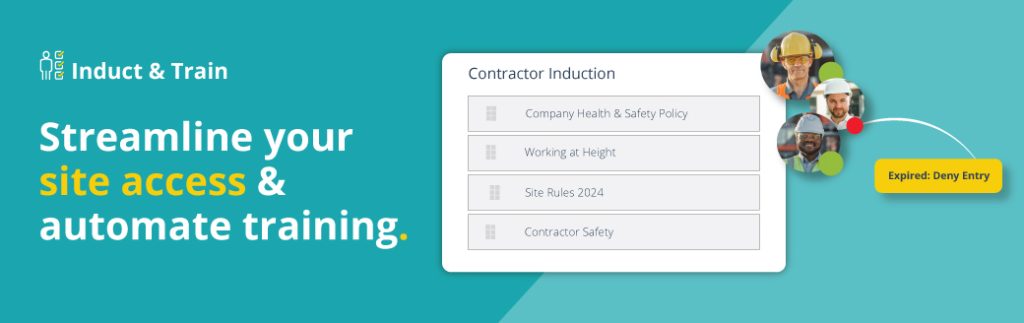
Induct & Train software helps organisations manage contractor inductions, training and records digitally.
Organisations can provide contractors with relevant information and training before they begin work. Managers can then monitor progress and identify outstanding requirements.
It can support organisations with:
- contractor onboarding
- online inductions
- training records
- refresher training
- contractor information
- policies and procedures.
For organisations managing contractors across different sites or projects, this provides a central place to manage important information.
Frequently asked questions about contractor onboarding
What is the difference between contractor onboarding and contractor induction?
Contractor onboarding is the wider process of preparing a contractor to begin work. It can include collecting documents, checking certifications, providing information and completing training.
A contractor induction is one part of that process. It usually provides information needed to work safely and understand the organisation or site.
Should contractors complete an induction?
Contractors may need an induction when they require information about the workplace, site rules, hazards or procedures before beginning work.
The exact requirements will depend on the work, site and organisation.
Can contractors complete an induction online?
Yes. Some contractor induction content can be delivered online before the contractor arrives on site.
Practical or site-specific activities can still be completed in person where required.
How do you keep track of contractor training?
Digital training records can help organisations see which training has been assigned and completed.
They can also make it easier to identify outstanding or refresher training.
What information should you collect from contractors?
The information required will depend on the organisation and type of work.
It may include contact details, company information, insurance documents, qualifications, certifications and information relevant to the work being carried out.